
To The Old Settegast Park Neighborhood Of Houston, Texas
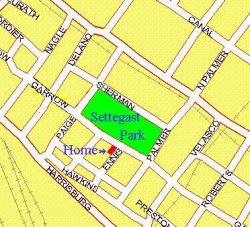
The old neighborhood around Settegast
Park in Houston, Texas was home
for me during the "Big Ones".
Growing Up During The Big Ones
The Big Ones Were The Great Depression of the 1930's and WW II of the 1940's.
An autobiographical journey through the 1930's and 1940's.

"The Good Ol' Days"
"Deputy sheriffs had just carried all
of their possessions out of the house
and dumped them in a line at the
edge of the street . . ."
(An Introduction To The Neighborhood)
T h e C o n t e n t s
For a young boy growing up in Houston's old east end, the nineteen thirties were as Charles Dickens wrote, "It was the best of times, it was the worst of times."
Growing up in those days was the worst of times, because we were in the midst of "The Great Depression". Money, even the opportunity to earn money, was hard to come by for many people.
I can still see in my mind's eye, our neighbors in the house behind ours on that sad day when they moved away. They stood in tears of anger and bewilderment, in the midst of their meager accumulation of furniture and belongings. Deputy sheriffs had just carried all of their possessions out and dumped them at the edge of the street because they couldn't pay the rent.
In many ways the "Great Depression" tended to equalize the people in a given neighborhood. Almost everyone living within that area was in the same condition.
Many of the people in our little neighborhood rented the house they lived in. Many of the lucky ones who owned their own homes rented a room or two in their house as a small apartment or took in a boarder or two. Keeping up with the neighbors meant being able to pay the rent and have food on the table.
A lot of us put pieces of cardboard inside our shoes every morning to cover the hole in the soles, but the tops were polished. Clothes were often patched, but they were clean and ironed. Food was simple but good. Families bought a pint of ice cream to celebrate like we buy a half gallon now. Eight to ten cents would buy a large loaf of bread or a quart of milk or even a pound of hamburger meat.
Hamburgers cost 15 cents each or 2 for 25 cents at Pete's hamburger stand downtown. It was across the street from the old Sam Houston High School on Capitol Avenue. Even better, you could buy a hamburger for a nickel at the little walk-up stand beside the Ritz theater on Preston Avenue.
A house wife put out a pretty good meal for 20 or 25 cents, if she could scrape together the 20 or 25 cents. Biscuits and cornbread were more the rule than the exceptions. Either dried butter beans, pinto beans or black eyed peas, and fried, boiled, or mashed potatoes were on the table almost every night. Sometime we had meat or salmon patties or macaroni and cheese, but not every night.
Luckily most butchers of that era would give their regular customers a few soup bones for the dog or a pork or calf liver for their cat. In reality there were a lot of dogs and cats that lived on left over biscuits or cornbread. Almost everybody made a little gravy and the left over was mixed with the bread for dog food. If there wasn't any gravy with the supper that night, the housewife would make a little after supper for the dogs. Their masters however, went to bed with full stomachs after eating a big bowl of vegetable soup with a soup bone in it or plate of fried liver and onions. Shoot, biscuits and gravy with a little bacon or sauage still makes a pretty good meal for us old timers.
At the same time however, it was also the best of times. We could go to bed at night with the doors and windows wide open for fresh air. Well, to tell the truth my mother was a kind of uneasy type person, so after dark we did fasten the hook and eye latch on the screen door. I don't remember anyone's house ever being burglarized. The only policeman that I remember ever seeing in our neighborhood was my own father.
Settegast Park was the nucleus of our neighborhood in the 1930's and 1940's. It was a place where preteens played in the sand box or on the swings or seesaws. Teen aged boys and girls often played softball and volleyball together and the boys played touch football and basketball.
The wide expanses of concrete walk ways invited anyone with sidewalk roller skates and that included virtually every boy and most of the girls in the neighborhood. Adults came to the park to watch their kids play in the day and for an occasional dance or to watch the free park movie at night. Almost everybody came to see the "Park Shows" as we called the free movie shown at the park every week.
It was just as safe for a young lady to walk across the park at 10:00 at night as it was for a grown man at noon. Settegast Park is one block wide and three short blocks long, bounded by Sherman and Garrow streets on the long north and south sides and Paige and Palmer streets at the east and west ends. The park is located in a small neighborhood between Harrisburg and Canal and about half way between Sampson street and the Harrisburg underpass at the edge of downtown in Houston's near east side.
In the nineteen thirties forties and fifties, the neighborhood was comprised mostly of city employees, railroad shop employees and train crews, teachers, machinists, sales clerks and route truck drivers.
The big brick building we called the park house was the only building on the park. It had one room for park equipment and another one for sport equipment and games to be checked out at the west end. The east end had a men's and a women's rest rooms.
The two ends were originally connected by a tile roofed, open sided pavilion with brick columns spaced along the sides. Later during World War II wood frame walls with locked windows and doors were added between the brick pillars, creating a large room for dances, plays and the free park show during cold weather.
Education for the children around Settegast Park began at the old Lubbock Elementary school, located on Sampson street at Harrisburg Boulevard. It was an old fashioned brick building with sliding boards fastened to all sides to be used as fire escapes. The building was Tee shaped, with the upper grades in the three story cross bar of the Tee at the front of the building. The first and second grades were taught in two story leg of the Tee that formed the back of the building.
One the major sports for the boys at Lubbock was sneaking up the fire escape and sliding back down. Only the brave ones climbed all the way to the third floor. There was a sort of landing or level area at the second floor then down again making it a thrilling ride. Teachers didn't stand a chance of stopping us, but waxed paper did. One of the more adventurous boys found a waxed paper bread wrapper (no plastic back then) and discovered how much faster you could slide, sitting on waxed paper. The second time he climbed all the way to the third floor.
Fast. . . we couldn't believe how fast until he launched from the flat area on the second floor landing and become airborne. He flew over the whole second floor slide and landed on the flat area at the bottom, but his broken ankle ended the fun and we were happy to play softball after that.
After graduating from Lubbock, our education continued at Stonewall Jackson Junior High School for the three years. It was located on Polk street two blocks east of Dumble. Jackson was a much more modern building with a gymnasium and heated indoor swimming pool. A huge number of city boys learned how to swim and dive in that pool. A separate shop building held complete wood working and metal working shops and a drafting class room.
Sam Houston High School, located in downtown Houston, was the final educational goal for most of the students in our neighborhood. College wasn't a serious expectation for most students in that socioeconomic group
III. No Cost Fun
The young of all species are born knowing how to play and almost all of them are born wanting to. Children growing up in the great depression era were no different, except the entertainment's we had were of little or no cost. Most of the time we wanted to bad enough to invent our own games.
All of us, both boys and girls, played no cost outdoor games. There was "Blind Man's Buff" where the person who was "it" would be blindfolded and have to find the other players who had to stand in one place until all were found.
"Hide and Seek", was a game where the one who was "It" hid his eyes at the base and counted, usually to one hundred, while the others hid. When the count was finished, "It" would hunt for the ones who were hiding. Each time "It" found someone, he had to beat them back to the base or they got in free. It was better played after dark.
"Tin can Up" was a version of hide and seek where a tin can was thrown and the one who was "It" had to run to get it and set it back on the base. The other players ran and hid while "It" went after the can. Each time "It" found someone, he had to beat them back and touch the can before they did to put them out. If they beat "It" they would throw the can. Then the thrower and all who were caught so far would hide again.
"Hop Scotch" was mostly a girls game, but just about all boys played when the other boys weren't looking. First a grid of numbered squares was drawn on the sidewalk with chalk. You had to start, standing on one foot and hop from square to square in order without missing one or stepping on a line. If you missed one or stepped on a line you lost your turn. You had a marker (rock) that you advanced one square each time you successfully completed the grid to keep score.
In "May I", all of the players would line up about 20 or 30 feet in front of the one who was "it". "It" would tell each player in turn to move forward with something like "John, take one giant step" or "Mary, take two baby steps." If the player moved before saying, "May I." he or she would loose their turn. The first one to "It" was the winner and was "It" for the next round.
"Simon Says" was very similar to "May I". "It" would tell each player in turn to move forward with something like "John, Simon Says take one giant step" or "Mary, Simon Says take two baby steps." If "It" didn't include "Simon Says" in the command and the player moved, he lost his turn.
"Red Rover" was a contact sport, where the players would form two lines facing each other about 10 or 15 feet apart. All the players in each line would grip hands and take turns calling to the other side. "Red Rover, Red Rover let John (or Mary or whoever) come over. The one called would run and try to break through the line between two players in the opposite line
In Tag, "It" had to touch one of the other players and he or she would have to be "It". Another version was "Wood Tag" where a player was safe as long as he was touching wood such as a tree or house or light pole.
IV. Games From Trash And Junk
At one time, every boy in my neighborhood had an old automobile tire. No real boy wouldn't be seen on the street unless he were running or at least trotting alongside of an old tire, rolling it down the street with his hand. Rolling tires was lots of fun, you could even get it moving and jump straddle it from behind and ride over the top, Of course you had to keep running when your feet hit the ground again or get bumped in the rear. Sometime you could talk one of the younger boys into sitting inside the tire while you rolled it along. Of course the real fun in that one was in watching him try to walk after he crawled out of the tire.
We also invented our own no cost, games using trash. One that all the school children in our area played, was called "Stoppers". In those days, milk came in quart, pint or half pint bottles. Each bottle of milk was sealed with a round flat waterproof cardboard stopper about an inch and a half in diameter. That meant that the milk stoppers were obtainable by almost anyone, but not in large quantities. The object of the game was to win all of your friends stoppers.
To begin, one of the boys threw a stopper on the ground and the next boy tried to throw his stopper down so that some part of it covered the one on the ground. Throwing meant a fast overhand motion, throwing the stopper as hard as you could toward the ground. Any throw less then enthusiastic was disqualified If the one thrown didn't cover any part of a stopper on the ground, the next boy threw a stopper down. Each player took a turn until someone succeeded in covering part of one of those on the ground and he won all of the stoppers laying on the ground. It was a very popular game played at home or at school during lunch time.
Another no cost trash based game we invented was called "Sticks". Each boy would get a stick about two feet long and whittle a point on one end. It was usually a piece of broom stick or something similar, even a piece of limb would work One of the boys gripped his stick by the "handle" end and threw it down as hard as he could, driving the pointed end into the ground. The next boy threw his stick down as hard as he could with two objectives. First, he had to knock the first boy's stick down flat on the ground and second, his own stick had to stick in the ground. If he failed, the first boy pulled his stick out and took his turn. The winner held the loser's stick out at arm's length and batted it as hard as he could with his own stick. The loser had to trot down and retrieve his own stick and return to play again.
I'm sure we didn't invent "Washers" because I've seen it played in many other areas. There was almost always someone in a neighborhood who worked for the railroad or in a shop some place where large bolts and washers were used. So it wasn't to hard to scrape up eight heavy steel washers, approximately two inches in diameter. Four of them were usually painted some color and the other four left plain or painted a contrasting color to make two sets of four.
The court was made by digging two small holes in the ground about fifteen or twenty feet apart. We usually lined each hole with a deviled ham or potted meat can to make it more permanent. Each player threw his set of washers, from behind his can, trying to make them land in or as near to the far can as possible. The game was scored like horse shoes.
Most of the boys were handy at building things. Most took wood shop, starting in Junior High School. Settegast Park usually had a summer program where we could use a few hand saws, hammers and coping saws and we learned to build whatnot shelves and bookends. Some of us had our own tools (translate that as our father's) and the local lumber yard always had a pile of scraps we could scrounge around in and use for small projects.
Most of us built our own homemade, sidewalk skate scooter. They were made from two pieces of scrap two by four, about three feet long nailed together to form an L shape frame. A couple of pieces of one inch lumber were nailed diagonally on each side of the joint to brace the upright part of the ell and one across the top for a tee handle to hold on to while you scooted along.
An old cast off sidewalk roller skate was taken apart at the center and one of the pair of wheels was nailed at each end of the bottom piece of the ell. I've ridden many miles on skate scooters that I built for myself. The more fancy ones had reflectors on the sides and back. Some of us even fastened an old flashlight to the front for a headlight.
Then of course there were the rubber guns we sawed and carved a gun shape out of a piece of board to shot large rubber bands. A spring clothespin was attached to the back of the handle. The bands were about a 1/2 to 3/4 inch wide, cut from a section of a car or truck inner tube. You would catch the end of the band in the clothespin, then stretch the band and catch it on the end of the barrel. Squeeze the clothespin to release the band and it would shoot through the air at whatever the gun was pointed at. We fought some fierce wars shooting the rubber bands at each other, but other then a little stinging no one ever got hurt.
Sling shots were only used for target practice or bird hunting. The stocks were usually made from a forked tree limb, but some time carved from a piece of board. Rubber strips cut from a rubber inner tube provided the power and the leather pouch to hold the rock was usually an old shoe tongue.
One cheap popular pass time was making and flying kites. The only store bought item you needed was a 5 or 10 cent ball of string. Homemade kites were usually the two stick style. A light weight stick about 3 foot long was used for the upright. Another piece about two foot long is tied to the upright to form a cross. Then a small slot is made in each end of the sticks and a piece of string is run tightly around the outside to form a diamond shape. The frame is then laid on a piece of newspaper or brown wrapping paper and the paper is cut to the shape of the diamond with an extra inch all the way around. The inch wide flap is coated with paste and folded over the string to securely attach the paper to the frame.
Another very popular hobby among the boys at least was building flying model airplanes. Small model airplane kits were available for as low as a ten cents each in the nineteen forties, but a twenty five cent size model had about an eighteen inch wing span that would usually fly pretty good. Fly? Sure they did. The models were almost always rubber band powered. They were extremely light weight, constructed of thin balsa wood sticks glued together to form the framework, then covered with glued on tissue paper. After the glue dried you sprinkled water on the tissue, causing it to shrink tight. The rubber band was fastened from the propeller, inside to the rear of the plane. You would wind the propeller about a jillion times then release the model plane and the propeller at the same time and watch it fly into the nearest tree.
V. Low Cost Fun
Remember reading and trading funny books? OK, so you call them comic books. To us they were funny books. Almost all boys, most girls and a lot of adults read funny books in the nineteen thirties and forties. They only cost a dime in those days. Almost every kid in the neighborhood had a cardboard box or at least a small stack of funny books that we carried to friends or even an acquaintance's house blocks away at least once or twice a month to swap for ones we hadn't read. It wasn't unusual for a father to be standing near and be giving advice while the trading was going on. We quickly learned a lesson for later life by taking good care of them. Damaged funny books with torn pages or loose covers had to be traded only for other damaged ones. Or sometime you could trade 2 or 3 damaged ones for one in good shape, if you could find someone who would take them. Batman, Captain Marvel, The Flash, Superman, The Human Torch and Walt Disney were among the most popular ones.
And, least we forget, there was the 15 cent Classic Comics series. They were the adults answer to making funny books acceptable to parents. They were comic strip versions of the classical books such as Moby Dick, The Deer Slayer, Little Men, Little Women and so forth. Junior high and high school students loved them. Not to read for pleasure, of course, but thousands of book reports were written without having to read a dull, two or three hundred page book without pictures. To us they were an archaic form of "Cliff Notes".
In bad weather we usually played domino games, usually it was Shoot the Moon or just plain dominoes. There seems to be a difference in the way we played plain dominoes, compared to our northern cousins. In the southern version, the free ends of the rows had to add up to five or a multiple of five to score points. If you played a domino with a five on the free end and the other free end of the row had a five free, you scored ten points, but if there was a double four on one end and you played the double six on the other end you scored twenty points. Another difference was that the first double played (as were the others) was laid crossways in the line, but the first was called the "spinner" and you could play on it's ends as well as the sides, making up to four free ends in the game.
Some of us had received a board game like Monopoly, Risk or Parcheesi for Christmas or some another special occasion. We would play the game on the lucky one's front porch if the weather was above freezing. Of course we could play on the living room floor, but then we would be to close to adults and have to behave accordingly.
Then of course here were also the card games like Rummy, Hearts, Spades, Go Fish and Old Maid, except at the houses of people like my grandmother Daut who believed that cards were tools of the devil. She lived 76 years without ever tasting a root beer because of it's name, but she played a mean game of Forty Two with her friends in the Eastern Star. I don't guess she ever knew that some people play Forty Two and Moon for money.
Then there were the very low cost outdoor games like marbles and tops.
And even though times were hard, most of us had either a bicycle or sidewalk roller skates or both..
VI. Fun For Girls
The girls played the same outdoor games as the boys, such as Hide and Seek Simon Says, Tag, softball and volleyball, and often with the boys. Some of the games, for instance Jacks and Hop Scotch were usually thought of as girls games, but a boy would sometime join in if none of his buddies were watching.
Combination boy girl thing quickly changed as the boy approached the teens. For instance, Myrtie Jane and Martha Ellen lived on the other side of the duplex next door to us for at least 10 or 12 years while we were growing up. Our front porches were only 10 or 15 feet apart. In our teens we would speak and talk across the porches for awhile during the day. After dark would be different. No dirty minds, it was because parents would be sitting on the porch too.
At that time I was full of youthful optimism and fully expected to marry one of those girls some day in the far dim future. But, at that time we had reputations to protect. It wasn't a good idea to let your buddies see you messing around with the same girl to often, even if she was your next door neighbor.
It was OK if all of us played with girls in a mixed softball or volleyball game in the park, but don't be seen hanging around a girl's house to often. That protected you and the girl both. The kidding from your friends could become pretty merciless if they thought you were getting serious about a girl. If you were seen hanging around with the same one to often, stories would probably start that she must be a "bad girl".
It's almost unbelievable now, the difference in the way young males were raised to regard females in the 1930's. "Good girls" were on a pedestal, they were always frilly and clean, and wouldn't even listen to, let alone utter a bad word. Good girls were what all boys expected to marry, but it was the bad girls they wanted to play with. It wasn't until after the weddings that we found out that good girls passed gas too and it smelled just as bad.
If you were seen hanging around with a girl that the other guys were already sure was a "bad girl", it was a different story. In that case you would be looked at with awe, almost like some kind of a hero. Then you would constantly be bombarded with questions about any lurid details regarding the relationship. Details about sex was a huge empty black space in most mid teen boy's minds back then and any small detail, even outright lies, were treasures to fill the empty space and eagerly sought after.
Dolls were big with the girls, but boys didn't discover them until many years later when G. I. Joe came along. Little girls would spent hours dressing and talking to their doll and daydreaming that it was their baby. Notice I said doll. as in singular, because one usually had to last for years. Not many parents could afford buying one every year.
Paper dolls were very popular with the girls during the depression. You could buy a book with one or more punch out girl figures printed on the light weight cardboard covers along with an assortment of cut out clothes and accessories that were printed on the inner pages. If you were lucky, you could use moms good scissors because they had sharp points. The clothes were equipped with tabs that could be folded over the paper doll. Books could be bought in the image of popular movie stars such as Shirley Temple, Betty Grable, Maureen O'Sullivan or Joan Crawford. Sometime special occasion books were created, like "Gone With The Wind" with Scarlet O'Hara and Rhett Butler and Melany and Ashley.
Girls also played with little stoves, refrigerators and kitchen sinks along with tiny dishes and pots and pans.
It seems that where boys usually had make believe games and toys, the girls had games and toys that prepared them for real life as future mothers and homemakers.
VII. The Passive Entertainment's
It was seldom that we had a little extra money, but if we did there was the Saturday morning "Kiddy Show." For a dime we could go to the Eastwood theater out on Polk Avenue and see a movie, a cartoon or two, maybe even four on some occasions and the current chapter of the serial.
More often though, "going to the movies" meant going to the free park movie across the street at Settegast Park. Whole families would start showing up at the park as the sun started setting on "park show" night. They would be carrying quilts to spread on the grass for seats and pillows so the little ones could sleep while the rest of the family watched the movie.
The city parks, back then, had a free movie every week at certain parks. The movie operator had a projection booth built on the back of a truck. He also used the truck to pull the snack trailer. The trailer was parked beside the audience area and it's sides opened up into a mobile popcorn and snow cone stand. Then a portable canvas screen was set up 30 or 40 feet behind the truck.
The movie operators made their money from the sale of popcorn and snow cones and from the sale of the slide show advertisements to the local merchants. The slides were flashed onto the screen before the movie and while he changed the reels. You could say that it was a preview of today's TV shows with commercials. Most of the films were westerns and probably not good enough for the "B" movie theaters, but we hollered and cheered and were just as happy as if it was the Metropolitan theater downtown.
Almost every family owned at least radio, it was the universal amusement enjoyed every day by almost everyone in the 1930's. The pre-school children usually listened to soap operas with their mothers during the morning and early afternoon hours. Some of the more popular ones were Ma Perkins, Pepper Young's Family, Lorenzo Jones, The Guiding Light and Stella Dallas. Unlike television, the radio could be listened to while the housewife washed and ironed or cooked or sewed.
The older children usually listened to programs like Jack Armstrong, Little Orphan Annie, Terry and the Pirates, and Dick Tracy after school and Let's Pretend on Saturday mornings.
The whole family would sit in silence in the evenings so as not to miss a word of programs like Lux Radio Theater, Amos and Andy, Inner Sanctum Mysteries, Fibber Magee and Molly, and Charlie McCarthy .
My wife just peeked over my shoulder and insisted that I include the Grand Ol' Opery as one of the popular programs.
Then there was that first prime time soap opera, One Man's Family, where we followed the lives of mother Fanny and father Henry Barbour and all the children, Paul, Hazel, Clifford, Claudia and Jack every Sunday
One program that almost no one forgot to turn on was the Lone Ranger. It came on at six thirty on Monday, Wednesday and Friday evenings. It was so ingrained in our daily lives that once I even listened to the complete William Tell Overture on a Sunday afternoon, for what seemed like an hour . I was waiting to hear that famous, "Hi yo Silver." I thought maybe they had changed the days the Lone Ranger aired and I wasn't going to take a chance on missing it. It was almost like finding out the truth about Santa Claus when I discovered that it was, "ugh," classical music and the Lone Ranger didn't personally own it.
VIII. Outdoor Sports
Both boys and girls played soft ball and often together, at the park. But only the boys played touch football and one goal basket ball. Settegast Park only had one basketball goal at the side of a concrete slab beside the park building. Most sports equipment was expensive and had to be checked out from the park to use each day, then checked in in the evening.
Sometime when the coach didn't show up, one of the other boys would bring a ball and I would get my bat so we could start a game of "Work up". Work up was a softball game you could play with as few as three players. With only three players, you had a batter, a combination pitcher, first baseman and a combination first baseman, fielder. When the batter made three outs, he became the fielder. The pitcher became the batter and the fielder became the pitcher. When more people arrived they were added to the out field and the ones already there moved up to create second and third baseman. As players were added more moved to home plate waiting to bat.
The only thing our group ever indulged in that could even cast a hint at criminal activity was what I like to call Temporarily Stealing. It was using the sports equipment from old Settegast park without the city's permission.
The City of Houston displayed unusual foresight, even back then and had built neighborhood parks for city kids to play in. They even bought and made all types of sports equipment and games available for kids whose parents couldn't afford to buy them. After all, it was still the tail end of the depression. The city hired people, usually high school or junior high school coaches to work as attendants during the summer and in the afternoons during the school year to check out the sports equipment and organize games.
The temporary stealing would have never happened if that system could have continued indefinitely. Therefore the temporary stealing can be directly attributed to World War II. The problem was caused when the wartime manpower shortage filtered down to our little park. Settegast park was quickly reduced to having an attendant one or two days a week and some weeks, none at all.
This meant that fifteen or twenty sports loving boys gathered in the park every day with places to play football, softball, basketball, volleyball, tetherball and shuffle board and many other games like caroms. It also meant that all of the equipment needed to play any of these games was hopelessly beyond our reach on the other side of a locked door.
On that day Billy and Buck showed up and I walked across the street to join them by the backstop at the softball diamond. Before long David and his brother Al along with Charlie and his little brother Josie joined us as we sat around talking. After Skeeter and Pete joined us. We still didn't have a ball so we moved up in the shade beside the building. The rest rooms were always open, but the rest of the building was locked unless an attendant was on duty.
Before long one of the guys said he had to take a leak and boys being boys, we all ended up in the rest rooms. Some to use the facilities and some just to keep up with the conversation. I don't remember which one of us noticed the covered access hole in the ceiling of the men's rest rooms. I don't guess it really matters, after all it was about fifty years ago and the statute of limitations ran out a long time ago.
We quickly discovered that if we helped one boy climb up and stand on top of one of the partitions between the toilets he could open the trap door and gain access to the attic.
No boy could resist exploring in the unknown and it only took a little while in the attic for Pete to discover that there was another access door to the attic from the equipment room at the other end of the building. Luck was with us and the trap door was located directly over the equipment storage shelves. The shelves acted as a kind of built in ladder to climb down to the floor. Although the door had a chain and padlock it could be pulled in enough to slip a ball through the crack.
In hindsight, I'm sure if Pete had been caught checking the equipment out on our own, via the rest room door, he would have been accused of theft. And, in the strict legal sense I suppose the equipment was stolen property as long as we were using it, even though it was only temporary.
We of course, had a completely different viewpoint. The sports equipment never left city park property and it was purchased with our parents tax money, to be used by the young people of our neighborhood. Therefore we were only doing with it, what it was intended for, using it. The big difference, that made it "temporarily stealing" back in the nineteen forties was that every day when we were through using the equipment, we took every single item back to the equipment room. It was as safe as it would have been if coach had been there everyday to check it in and out.
You see, to many people living in the nineties, our attitudes back then would seem, to use an expression of those times, "corny". We really believed that the park and the equipment in it belonged to all of us and we darn sure wasn't going to let anybody steal it to keep for themselves.
IX. Night Of The Living Dummies
I call it the night of "The Night Of The Living Dummies". After a movie at the Majestic one night, Billy, Dale and I discovered that we still had enough money left to go around the corner on Travis and Walker to the Hamburger Bar (an antique Fudruckers.) for supper. The Hamburger Bar was very popular among teens with limited funds. You would get a huge bun and a large meat patty on your plate. Then you took it to the "bar" where you piled the lettuce, tomato, onion, and pickle on it according to your own taste Needless to say, teen age boys usually had a hamburger about 3 inches thick.
It was dark outside when we finished eating. It was still to early however, for three teenage boys to go home even though we only had enough money left for bus fare. We stood on the sidewalk around the corner on the Walker Street side and talked it over. What could we do to have a little fun without spending money?
Then it struck one of us to play the "look up game." Almost as one, our heads tilted back and without another word between us we all focused on the same spot in the night sky. Most of the people strolling past us on the sidewalk just sneaked a look upward as they walked by. A few even stopped near us for a minute or two, looking up in vain trying to discover the elusive object that only we could see. But, not a single one of them ever ask what we were looking at in the dark sky above. After a little while we begin to add a little finger pointing and an occasional "wow" or "golly" to add a little spice to the game. But, like it is with most teens, the game begin to wear thin after thirty minutes or so and we begin to get bored.
We had worked our way a little west on Walker Street when I noticed the show window of the store building behind the Hamburger Bar. Something was wrong. For one thing, there were only a few sawhorses and some scraps of lumber in the display window. Then it registered, the show window didn't have a glass in it. Evidently workmen were doing some remodeling during the day and had picked up their tools and left everything else as is, at quitting time.
The next couple that walked down the sidewalk looked back at the window three different times as they passed by. Billy was sitting on one saw horse and I was sitting on the other one with Dale standing between us. We were frozen stiff as people walked by, unless they happened to turn the other way as they walked by. Then we would make a few quick changes, like moving an arm or facing in the opposite direction. The double takes were hilarious when they looked back and tried to decide if their eyes were playing tricks on them.
After a while we changed our style and begin creating little vignettes. As a for instance, one of us would be frozen in the act of swinging a fist at the other, while the third one cheered them on. Then there was the one where one of us was on his knees, bent over backward while his hands gripped the arms of the one who was choking him.
These frozen action tableaus got a lot of attention, but human nature being what it was, no passersby ever stopped to investigate. Most looked at least twice and some looked back the third or forth time before they begin walking a little faster.
X. When Summer Fun Ended
I started my first real summer job when I was 14, but that wasn't to young, Billy was only 12. Billy and I started working at Sidney Myers Inc. (later Weingertens), wholesale grocery warehouse on Lockwood Drive. His dad ran the employee's lunch counter and paved the way for Billy to be hired. Then they helped me get on.
It was the summer of 1942 and World War II was going strong. That made it pretty easy for a 12 or 14 year old boy to get a man's job. There just wasn't enough men left to fill them. And, it was definitely a man's job. We made $14.00 a week, working 8 hours a day stacking 20, 30 or 40 pound cases of food and sacks that were less then 100 pounds. Some of the older men were usually assigned to the 100 pound ones
Hall's grocery was technically an after school and Saturday job rather then a summer job and only lasted a few months. It was hard on a teen age boy, working until after dark while friends were playing football. I dipped ice cream, made malted milks, iced the soda water box, stocked shelves, swept the floors and worked behind the meat counter. One thing I learned at that store, was the fact that we always gave honest weights on the meat. We did have orders to add 2 or 3 cents to the price of each package though. And if the customer didn't have enough ration stamps or tokens, Mr. Hall waited on that customer personally. I did buy my first 22 caliber rifle with money I earned there. It was a single shot Remmington that cost me $7.35 at the Bering Cortez hardware store downtown. Mr. Hall let me off a couple of hours and I rode the bus downtown to buy it.
The Boulevard Food Market was the next summer job. I was a stock clerk there, kept the shelves full and weighed up paper sacks of sugar in 2 and 5 pound sacks. The store bought sugar in 100 pound bags and we repackaged it.
One of my fond memories of working at the Boulevard Food Market was the day a City of Houston fireman, from the fire stationon Sampson around the corner, came in. He told Mr. Goldberg he wanted to buy a package of cigarettes.
"We don't have any cigarettes, there's a war on, you know." was the rude reply.
"Hell, I could see them, down there under the counter." The fireman stated angrily.
"I'm sorry, but those cigarettes are reserved for our regular customers." Mr. Goldberg answered.
"Well I certainly hope you're name is on our regular customer list at the fire station if your house or store ever catches on fire." The fireman replied as he turned to leave.
"What brand would you like to have?" Mr. Goldberg ask in a very friendly tone
I worked At the Boulevard Food Market all summer to save $65.00 so I could buy a used clarinet. When school started, I was able to join the Old Sam Houston High School band. Pete also worked there that summer, but Billy worked on the Pepsi Cola truck for his father.
Working for the old Southern Henke ice company on Milam and the north side of Buffalo bayou the next summer was my first 7 day a week job. Seven days work and every week they gave me a huge check for $49.00. Every Saturday was payday and the first thing I would do after I picked up my pay was tp go by the Bering Cortez hardware store to buy some new tools for my growing collection.
I worked in the engine room wiping oil off the machines, checked gauges, mopped the floors with varsol and cleaned the condensers on the roof. It was the first time I ever saw engines big enough to climb a ladder to the catwalk around it so I could wipe it down every hour or so. But I only had to mop the white painted concrete floor once a day.
The old Forum Cafeteria was located on Main Street, only a few blocks from the old Sam Houston High School which was on Capital and Caroline. That job was also an after school job. Billy and I were working together again. We would walk over after school and work from 4:00 P.M. until about 10:00 P.M. in the dish room.
Shudde Brothers hat factory was my last school days job. It started as an after school job in my junior year, ran into the summer and became permanent until I was drafted in 1952. Once again, Billy started there first and helped me get hired.
Shudde Bros. is nationally known for renovating men's hats. We worked on hats for Gene Autry and Roy Rogers as well as many minor western stars. We even renovated the uniform hats for the entire Florida highway patrol every year.
We removed the bands and lining before washing the hat in solvent and again in soap and water if it was needed. Then we steamed the crowns back to shape over a wooden block, pressed the brims flat and rubbed in powdered color when needed. The brim was steamed back to shape over a wooden flange and the hat was sent upstairs to have new trimmings sewed back on it.
I was still working at Shudde Brothers when Nellie and I married in 1949. I was earning 63 cents an hour and working a five and a half day week. Every Saturday at 1:00 PM, we would punch the clock and line up at the pay window. There, I would receive a little manila envelope containing the cash money that I was due for that week.
I. An Introduction To The Neighborhood
II. Education For Settgast Kids
The End